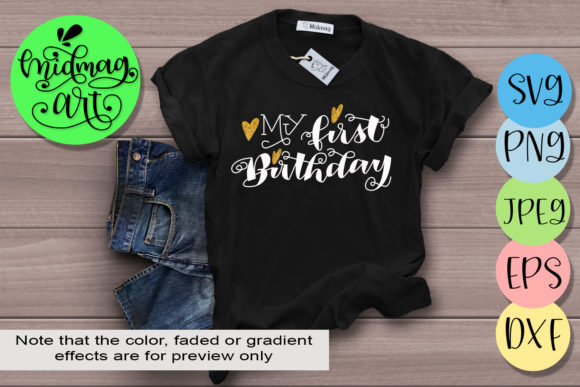
My First Birthday
As an embroidery designer and product reviewer, I’ve evaluated countless digital files for real-world use. My First Birthday is a straightforward SVG design that promises to deliver a nostalgic, celebratory vibe for baby-related projects. The file is compatible with popular cutting and design software, making it accessible for a wide range of users. But what does it look like in practice? Let’s break it down.
The First Impression
My First Birthday immediately evokes a warm, playful mood. The design features a simple, clean layout with a central "1" surrounded by balloons, cake, and confetti. It’s ideal for baby items, personalized gifts, or custom apparel. The theme is classic and timeless, fitting well for first birthday celebrations. The shape is compact and balanced, which makes it versatile for various applications.
The level of detail is moderate—enough to be recognizable but not overly complex. This means it works best on smooth fabrics and in larger hoop sizes. The visual personality leans toward simplicity, which is great for handmade products that need to feel authentic and easy to produce.
Real-Life Embroidery Scenarios
Imagine preparing a custom embroidered tote bag for a client who wants to celebrate their child’s first birthday. My First Birthday would work well as the main design. The size allows for clear stitching without overwhelming the fabric. On a cotton tote, it looks polished and professional. For a sweatshirt or t-shirt, it’s equally effective, especially when using light thread colors against dark backgrounds.
It also fits nicely on baby clothes, such as onesies or sleepers. The design isn’t too intricate, so it avoids issues with small details getting lost in the stitching. For patches, it translates well into applique or satin stitch, depending on the desired texture. On a cap or hat, the design might require a slightly smaller hoop, but it still holds up well.
For holiday or wedding gifts, My First Birthday can be adapted into a decorative element. It’s suitable for pillow covers, tea towels, or even kitchen linens. The clean lines make it easy to incorporate into a broader design scheme, whether for a boutique product or a small shop merchandise line.
Where to Use with Caution
While My First Birthday is generally reliable, there are a few situations where care is needed. If you’re working with small hoop sizes, the design might not fit comfortably, leading to potential misalignment. On textured fabrics, the stitching may not lay flat as intended, especially if the design has dense areas.
Thin or stretchy fabrics could cause the stitches to pucker or distort. Dark fabrics may require a contrasting thread color to ensure visibility. For layered garments or curved surfaces like caps, the design might need some adjustment to sit properly. Tiny lettering or detailed corners could get lost if the stitch density is too low.
When used in commercial embroidery projects, it’s important to confirm licensing terms before selling finished products or digital files. Always test the design on scrap fabric first to ensure it meets your standards.
Visual Appeal and Practical Value
My First Birthday maintains a high level of visual appeal when stitched correctly. The clean layout ensures clarity, making it easy to recognize from a distance. It adds value to handmade products by offering a customizable, personal touch that customers appreciate.
From a customer perspective, it’s a safe choice for personalized gifts. The design feels familiar and celebratory, which enhances giftability. For small business owners, it’s a solid addition to an Etsy shop or craft fair booth. Its simplicity also helps maintain brand consistency across different products.
As an embroidery designer, I find that My First Birthday works best when paired with other elements, such as text or additional graphics. It’s not a standalone piece for highly detailed projects, but it serves its purpose well in simpler, more functional designs.
Embroidery Designer Notes
Before using My First Birthday in any project, I recommend testing it on scrap fabric. This helps identify any issues with stitch density or placement. Check how the thread colors contrast with the fabric—light colors may not show up well on dark backgrounds, and vice versa.
Review the hoop size requirements. If the design is too large for your machine, consider resizing it or using a different version. Inspect small details closely, especially if the design includes tiny letters or intricate patterns. Test it in black and white mockups to see how it looks without color.
Use proper stabilizer to prevent puckering, especially on delicate or stretchy fabrics. Confirm that the design is suitable for both personal and commercial use. Always check the licensing terms before selling any finished products or digital files.
Final Thoughts
My First Birthday is a practical, versatile design that suits a variety of embroidery projects. It’s ideal for baby items, custom apparel, and personalized gifts. While it has limitations in certain scenarios, it performs well in most standard applications. As a designer, I’d recommend it for small business owners, Etsy sellers, and crafters looking for a reliable, easy-to-use machine embroidery design.