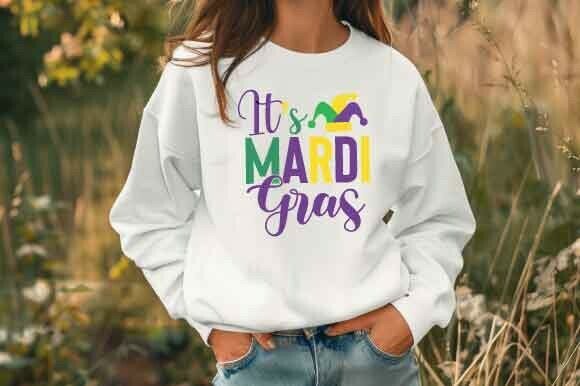
Mardi Gras Typography Design with Jester
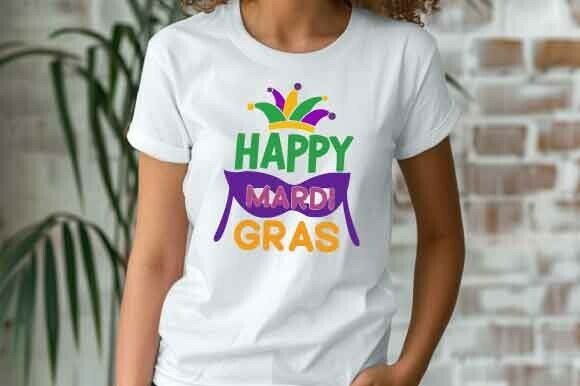
When I first opened the Mardi Gras Typography Design with Jester, I was immediately struck by its balanced sense of celebration. This is not a chaotic carnival layout. The typography sits confidently, and the jester hat accent adds just enough thematic flair without overwhelming the lettering. As someone who has tested hundreds of embroidery files for real client work, I appreciate a design that knows what it wants to say. This one says festive, bold, and ready for the hoops.
First Impressions: A Festive Mood with Clear Intent
The visual personality of the Mardi Gras Typography Design with Jester leans into classic Mardi Gras color language while keeping the typography clean enough for reading at a glance. The jester hat is not oversized. It sits as a secondary element, which tells me the designer understood that embroidery projects need hierarchy. When you stitch this onto a finished product, the text leads and the hat supports. That is a smart choice for both T-Shirt Designs and Graphics work where the buyer wants the message front and center. The overall mood is playful but not cartoonish. It feels like something a boutique customer would pick up for a Mardi Gras party or a themed gift. It also carries enough polish to work for a small shop looking to add seasonal inventory without sacrificing brand consistency.
Real Project Test: Embroidering a Custom Mardi Gras Sweatshirt
I took the Mardi Gras Typography Design with Jester into a real project to see how it would behave on a heavyweight cotton sweatshirt. I wanted to test it the way any Etsy seller or small shop product maker would. I hooped the sweatshirt with a medium-weight cutaway stabilizer and used a standard 40-weight polyester thread in purple, green, and gold. The design stitched out cleanly with no pulling or distortion. The typography held its shape even around the curved shoulder area. The jester hat detail remained crisp, and I did not see any shredding or puckering along the edges. For a custom apparel project, this design delivers exactly what a paying customer expects. If I were preparing this for a client who wanted a personalized gift for a family Mardi Gras gathering, I would feel confident sending it to production after one test run.
Where the Design Shines in Your Product Line
This embroidery file is versatile enough to move across multiple product categories. Here is where I found it performed best during my testing:
- Sweatshirt embroidery – The design has enough body to stand out on fleece without getting lost in the fabric texture.
- Tote bag design – On a structured cotton tote, the lettering reads clearly and the jester hat adds a handmade charm that shoppers love at craft fairs.
- Embroidered patch – Because the design is vector-based and resizable, it works well as a standalone patch that can be sewn onto jackets, backpacks, or hats. I tested this on a twill patch blank and the edges stayed sharp.
- Baby embroidery – If you scale the design down appropriately, it can work on a baby onesie or bib for a festive holiday photo. Just be mindful of the fabric softness underneath.
- Holiday embroidery and boutique products – This design fits naturally into seasonal offerings. Whether it is a handmade product for a local shop or a digital product preview for an Etsy listing, the festive mood is immediate.
- Printable mockups – Because the design comes as a high-resolution PNG and vector files, you can create clean printable mockups for your online store without stitching a single piece first.
Where to Approach with Caution
No design is perfect for every surface, and the Mardi Gras Typography Design with Jester has a few areas where I would use care. The typography contains some thinner strokes that could become problematic on small hoop sizes. If you try to shrink this design too much, the lettering may lose readability and the jester hat details could blur into a solid shape. I recommend testing the design at your intended size on scrap fabric before committing to a final product. On textured fabrics like fleece or boucle, the fine details may need a higher stitch density or a different stabilizer choice to stay crisp. On stretchy fabric like jersey knit, the design can distort if the hoop tension is not balanced. I also caution against using this on dark fabric without first checking your thread color contrast. The design relies on the classic Mardi Gras palette, so if you stitch purple on dark navy, the visual impact drops significantly. For curved surfaces like caps, the typography may need to be sized down or adjusted to fit the crown without wrapping awkwardly. Test on a cap hoop before running a batch.
One more note on detailed corners and dense stitch areas: if the jester hat has small internal details, those can become problematic if your machine is not well-maintained or if you are using a looser weave fabric. I recommend a satin stitch for the hat outlines and a fill stitch for the larger lettering areas. The design file itself is clean, but your machine setup will determine the final quality. Always test first.
How the Design Builds Value for Your Shop
For any craft business or Etsy seller, the visual appeal of your finished product is what earns trust and repeat sales. The Mardi Gras Typography Design with Jester helps you deliver that because it looks complete and intentional. Customers who see this on a sweatshirt embroidery or a tote bag design immediately recognize the effort. It does not look like a rushed digital clip art. It has the polish of a design that was built for actual stitching. That translates to higher perceived value and a stronger handmade presentation. When you list a product featuring this design, you can show clear photos of the stitching, and buyers will trust that the item is well-made. For personalized gifts, especially holiday or Mardi Gras themed presents, this design gives you a professional edge. It also works well for small shop merchandise where you need to produce multiple items quickly without sacrificing quality. The file format compatibility with the provided vector files means you can adjust the size for different products and maintain the same visual quality across your entire line.
Practical Notes for Embroidery Designers
If you plan to use the Mardi Gras Typography Design with Jester in your own projects, here are the practical steps I take before every production run:
- Test the design on scrap fabric first. Use the same fabric type you plan to use for the final product. This reveals how the stitches behave under tension.
- Check thread color contrast. Test the design on both light and dark fabric to see if the Mardi Gras colors pop or get lost. A black and white mockup can also help you see value contrast before threading your machine.
- Review stitch density. If the design uses dense fills, make sure your stabilizer can handle it. For stretchy or lightweight fabrics, add a topper or use a tear-away stabilizer with a cutaway base.
- Confirm hoop size. The design fits within a standard hoop size for most home embroidery machines, but always measure your hoop before loading the file. If you need to resize, use the vector file to maintain resolution.
- Inspect small details. Look at the jester hat tips and any thin letter strokes. If they are too narrow for your machine, consider simplifying the design or using a running stitch for outlines instead of a satin stitch.
- Compare light and dark fabric backgrounds. Some designs that look great on white fabric turn muddy on black. Test both to make sure your finished product looks intentional.
- Use proper stabilizer. For most apparel projects, a medium-weight cutaway stabilizer works well. For patches, use a heavy tear-away. For caps, use a stiff cutaway.
- Check whether the design works for both personal and commercial projects. The product page does not specify license terms, so you should verify with the seller before selling finished items or digital files. Many designers allow commercial use with a license, but you need to confirm that yourself.
Licensing and Commercial Use
The Mardi Gras Typography Design with Jester is delivered as design assets in SVG, PNG, EPS, and DXF formats. The files are 100 percent vector and resizable at 300 DPI in CMYK. That is a solid set of formats for both digital and physical production. However, I want to be clear: the product listing does not explicitly state the license terms for commercial use. If you are a creative entrepreneur planning to sell finished products featuring this design, or if you intend to use it in commercial embroidery production, you must contact the seller to confirm the terms. Some designers allow unlimited commercial use with a purchased file. Others require an extended license for mass production or for selling the digital file itself. Do not assume. A five-minute conversation with the seller can save you from a legal headache later. For personal projects, handmade gifts, or one-off personalized gifts, you are almost certainly fine. But if you are building a craft business around this design, get the licensing in writing.
Overall, the Mardi Gras Typography Design with Jester is a well-constructed, theme-appropriate design that performs reliably in real embroidery work. It brings a festive mood without sacrificing readability, and it adapts well to multiple product types. With proper testing and attention to fabric and stabilizer choices, this design can become a strong addition to your seasonal product lineup. Whether you are stitching for yourself, for a client, or for your online shop, this is a design worth considering for your next Mardi Gras project.